Introduction
Barhai caste is a prominent Hindu caste mainly found in northern India. Barhai caste is known by different names such as Panchali, Khati Kolash, Chowrasia, and Tarkhan. Interestingly, Barhai caste is mostly found in towns as compared to village areas. In Hindi language and Urdu language, the term ‘Barhai,’ literally means ‘carpenter.’
Since ages, artisans from the Barhai community
have formed an essential part of the traditional rural economy under the
Jajmani system, a socio-economic arrangement in which skilled craftsmen
exchanged their services for agricultural produce and other necessities. Known
for their exceptional woodworking skills, the Barhais contributed significantly
to India’s architectural and cultural heritage through the creation of
intricate woodwork, tools, and construction services. Their craftsmanship can
be seen in the elaborate architectural structures such as temples and
chariots that are an important part of Indian history and
civilization.
Origin of Barhai Community
The Barhais are believed to have originated in the Indian state of Uttar Pradesh. Historically, the Barhais played a significant role in preserving and advancing ancient Indian art and culture, particularly through their craftsmanship in constructing temples and chariots. Renowned for their artistic skills, they created idols and images of Hindu Gods and Goddesses that became central to worship and religious traditions. The Barhai community was also known for providing sketches and architectural blueprints that guided builders in the construction of Hindu temples. Like many artisan communities in India, they trace their lineage and craft traditions to Lord Vishwakarma, who is revered as the divine architect and patron of artisans.
According to traditional legends, Barhais have descended from Lord Vishwakarma. It is said that there were five sons of Lord Vishwakarma and one of them was called Barhai and he got engaged in carpentry. From the other four sons of Lord Vishwakarma, the Lohar, Sonar, Thathera and Kumhar communities have descended.
Sub-Groups of Barhai Community
Barhai community have a conventional caste council. Barhai community consists of a number of endogamous sub-divisions, such as Kanaujiya, Lohar, Kamarkala, Koka, Maghaiya, and Mathuria. Barhai caste also has some exogamous septs, which are named after villages. However, in some localities they have no septs, but only comprise surnames.
Depending on the state, the Barhai community is referred to by different endogamous sub-castes:
North India: The community is commonly known as
Badhai, a term often derived from the Sanskrit word Vardhaki, or as Khati.
Punjab and Haryana: Members of the community are
referred to as Tarkhan.
West India: They are identified as Suthar or Sutar.
South India: The community is generally considered
part of the broader Vishwakarma or Kammalar groups. In Kerala, carpenters
specifically are known as Asari.
Eastern India: The community is recognized by the names Sutradhar or Karmakar.
Culture of Barhai Community
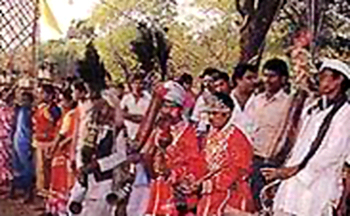
Barhai community is a Hindu community and they worship Lord Vishwakarma. They speak a local dialect of Hindi language. In their community, people with the same surname cannot intermarry. During their wedding ceremony, Brahmin priests are employed. When wedding procession reaches the village of the bride, it halts near the temple of Lord Hanuman. In the community of Panchal Barhais, the bridegroom does not wear a crown but ties a bunch of flowers to his turban. Divorce and widow remarriage are permitted in Barhai communities. However, a widow is prohibited to marry the brothers of her first husband.
Barhai community has certain indigenous traditional beliefs.
They consider the sight of a mongoose and of light-grey pigeon or dove as lucky
signs. People of this community cremate the dead and throw the ashes into a
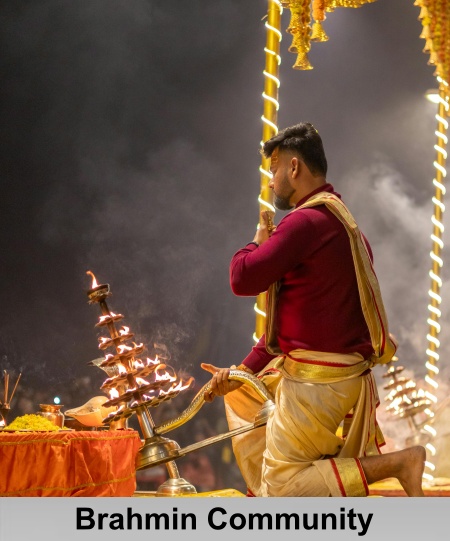
stream or river. The whole ritual is being performed with the assistance of a Brahmin
priest. Like other communities in India that follow Hinduism, Barhai community
also celebrates popular Hindu
festivals. They mainly celebrate Holi, Diwali, Navratri,
and Ram
Navami.
Occupational Evolution of Barhai Community
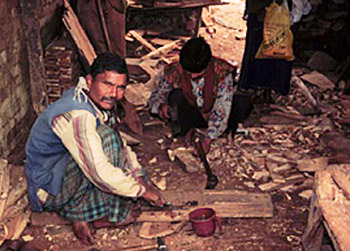
Barhai community is mainly associated with their traditional work of carpentry. Today, some of them are also involved in manufacturing of furniture, whereas some have moved to cultivation. In some of the northern districts of India, people of Barhai community makes and mends the plough and other wooden implements that are required in agricultural activities. They are also associated with making carts and building or repairing houses. In most of the major cities, the Barhais are quickly acquiring an increased degree of skill in order to meet the increasing demands for a better and extensive class of houses and furniture.